
Skin cancer

FAQs
How often should I get a skin check?
Given Australia’s high-UV climate, we recommend an annual skin check for everyone especially those with risk factors like fair skin, multiple moles, a family history of skin cancer, or past sun exposure. If you have a personal history of melanoma or other elevated risks, a check-up every six months is recommended. Regular screenings offer peace of mind and ensure any changes are caught early.
How much does a skin cancer check cost?
An initial consultation is $140 upfront. If you happen to need a minor procedure during your visit, there may be an additional cost. The good news is that Medicare rebates apply to all our services, meaning your actual out-of-pocket expense will be much lower.
At what age should children have a skin check?
How should I protect my skin from sun damage?
The most effective way to prevent skin cancer is to combine five simple sun-safe habits whenever the UV index hits 3 or above. Remember, UV radiation isn't the same as the sun's heat your skin can sustain damage even on cool or overcast days.
Slip on protective clothing: Wear tightly woven, loose-fitting fabrics that cover as much skin as possible, such as long-sleeved shirts with collars.
Slop on SPF 50+ sunscreen: Apply a generous amount of broad-spectrum, water-resistant sunscreen 20 minutes before heading outdoors. An adult needs roughly 7 teaspoons (35ml) for a full-body application. Reapply every two hours, or immediately after swimming or sweating.
Slap on a broad-brimmed hat: Choose a broad-brimmed, bucket, or legionnaire-style hat that protects your face, ears, and the back of your neck. Baseball caps and visors leave these high-risk areas dangerously exposed.
Seek out shade: Utilize trees, awnings, or beach umbrellas to reduce direct UV exposure. Keep in mind that UV rays reflect off surfaces like sand, concrete, and water, so shade should always be used alongside other protective measures.
Slide on sunglasses: Protect your eyes from UV damage by wearing close-fitting, wrap-around sunglasses that meet Australian Standard AS/NZS 1067.
How do I choose the best skin cancer doctor for me?
The ideal match comes down to expertise, accessibility, affordability, and genuine follow-up care. We’d suggest checking your prospective doctor’s qualifications and whether they’re a member of the Skin Cancer College of Australasia.
Ultimately, a skilled, experienced clinician with a reassuring manner matters far more than fancy equipment alone, though we’re proud to offer the latest technology here too. Since 1992, we’ve built our reputation on being a trusted, thorough, and caring team. We provide comprehensive full-body examinations and personalised treatment plans tailored to you. We’d love the opportunity to look after your skin health.
Why can’t I book some of your doctors online?
Some of our doctors are in high demand, which means they have longer waiting lists and need a little more care when it comes to scheduling. To make sure every patient gets the right amount of time and attention, we handle these bookings over the phone rather than online. Our friendly team is always happy to help you find the next available appointment that works for you just give us a call!
Do I need a referral?
Not at all! You’re welcome to book an appointment with us directly. Simply visit our book now page, or give us a call on +61 2 9411 6199 during business hours whenever suits you best.
About skin cancer
What causes skin cancer?
Ultraviolet radiation (UVR) from the sun is the main cause of skin cancer. Artificial sources of UVR, such as sunlamps and tanning booths, can also cause skin cancer. Australia receives high amounts of UVR and this accounts for its high rate of skin cancer. Skin cancer is related to lifetime exposure to UVR. Most skin cancer appears later in life, but the sun's damaging effects begin at an early age.
How can I prevent skin cancer?
Prevention is better than cure. Sun protection should start in childhood to prevent skin cancer later in life. It is important to note that on a moderately cloudy day, the risk of sunburn is almost the same as a cloudless day. Even if you are in the shade, sun can reflect off other surfaces to cause sunburn. Aside from protection, early detection is the most important factor in reducing the morbidity and mortality from skin cancer.
What are the different types of skin cancer?
The three types of skin cancer are basal cell carcinoma (BCC), squamous cell carcinoma (SCC) and malignant melanoma (MM).
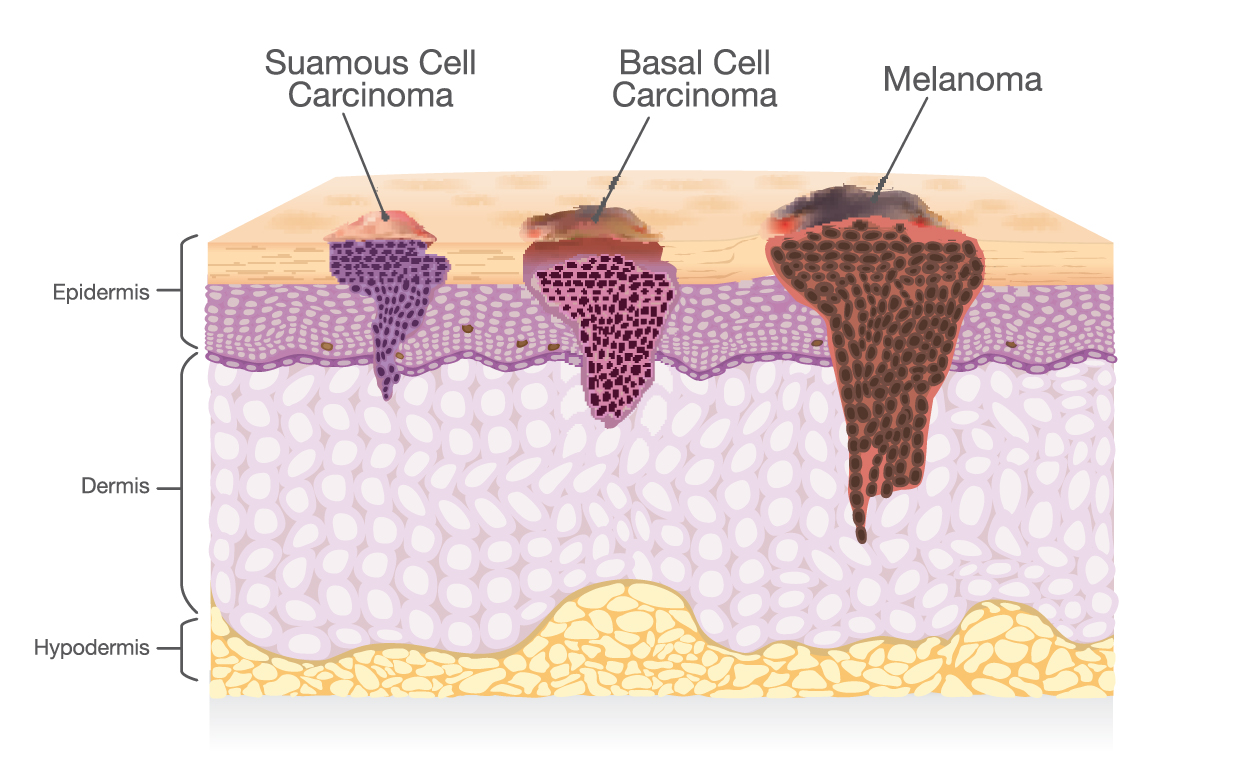
BCC and SCC are sometimes together called keratinocyte carcinoma (previously referred to as non melanoma skin cancer). These can occur anywhere on the skin (although mainly on exposed sites such as head, neck and arms) and have a varied appearance, such as a small, smooth, shiny, pale or waxy lump, sore, ulcer or scaly patch of skin which is new, grows, or changes in shape or colour, or that does not heal within a few weeks. Sometimes, the lump bleeds or develops a crust.
BCC is the most common skin cancer accounting for more than 75% of all skin cancers in Australia. It is a slow growing cancer that seldom spreads to other parts of the body, and is easily treated if found early. SCC is less common representing 20% of Australian skin cancers. SCC rarely spread, but it does so more often than BCC. It can be lethal if not treated early.
What is melanoma?
Melanoma (MM) is the most dangerous type of skin cancer, and the most common cancer cause of death in young Australians under 40. It occurs when melanocytes (pigment cells of the skin) become malignant. MM can occur on any part of the skin. In men, it is most often found on the trunk, and in women, most often on the legs. The chance of developing MM increases with age, but it affects people of all age groups.
MM can be cured if it is diagnosed and treated at an early stage. However, if detected late, cancer cells may grow deeper and potentially spread (or metastasise) to other parts of the body. MM is a significant cause of morbidity and mortality in Australia. The first sign of a MM is a change in the size, shape or colour in an existing mole or the appearance of a new mole.