
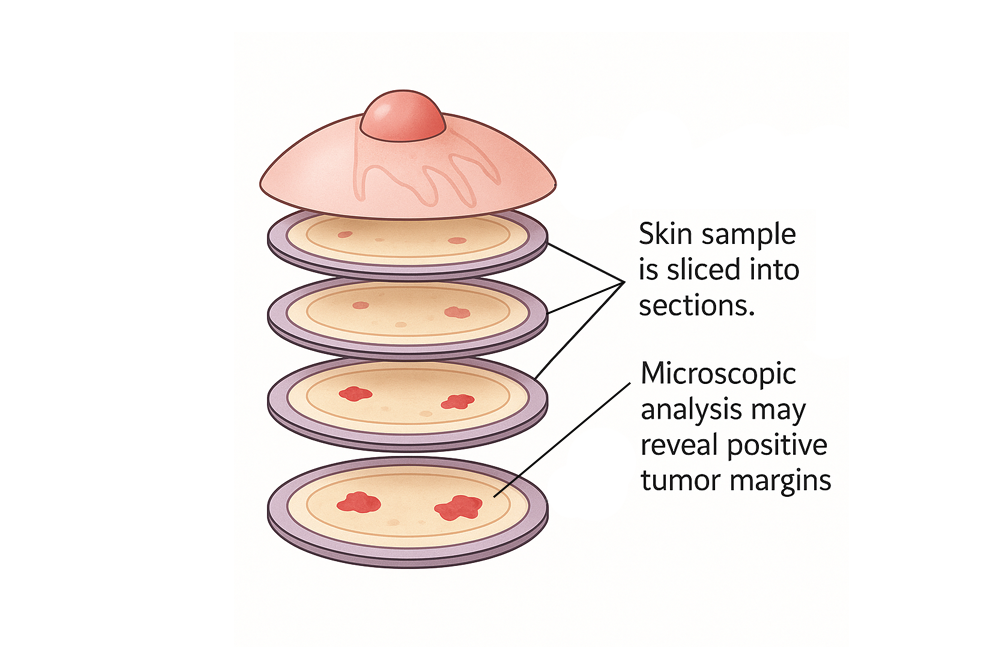
Mohs Micrographic Surgery
Mohs Micrographic Surgery shines in treating tricky basal cell carcinomas (BCCs), especially in cosmetically or functionally sensitive areas like the eyes, nose, or lips, and for recurrent tumors. It’s the go-to choice when precision is paramount to preserve appearance and function.
Unlike traditional pathology, which slices tissue vertically (like bread loafing), Mohs removes the tumor in thin, horizontal layers. This allows for a complete 100% margin evaluation, compared to just 1–2% in standard methods, ensuring no cancer is missed.
Mohs boasts impressive cure rates, with recurrence rates as low as 1% for primary BCCs and 6% for recurrent BCCs after five years, compared to 10% and 17% with traditional excision. By sparing healthy tissue, it minimizes scarring, but it’s costly and may also require a plastic surgeon to close the wound.
In Mohs, the surgeon doubles as the pathologist, examining each layer under a microscope during the procedure. This real-time assessment ensures clear tumor margins before closing the wound, unlike traditional pathology, which involves delayed analysis by a separate pathologist.